
The Soul of Authentic Chikankari
Founded under the visionary leadership of ZEBA ZIA (Proprietor), Maryam Chikan is dedicated to preserving the purest expressions of traditional needlework. Based in the historic cultural heart of Lucknow at Nakkhas Market, we connect discerning patrons with heirloom apparel handcrafted by master women artisans.
A Symphony of Needle & Thread
Legend holds that Chikankari was introduced to the royal courts of Awadh by Empress Noor Jahan in the 17th century. What began as an exquisite royal pastime soon flourished along the banks of the Gomti river into India’s most celebrated shadow-work embroidery.
Unlike mechanized machine imitations flooding modern markets, genuine Maryam Chikan garments are 100% hand-embroidered. Each kurti, anarkali, or dupatta represents between 20 to 180 hours of meticulous, hand-guided labor by generational artisans who have inherited these sacred stitches.
Geographical Indication (GI) Certified
Lucknow Chikankari is recognized with a Geographical Indication (GI) tag. When you acquire a creation from Maryam Chikan, you are directly investing in the livelihood of over 150 rural artisan families across the Lucknow craft cluster.
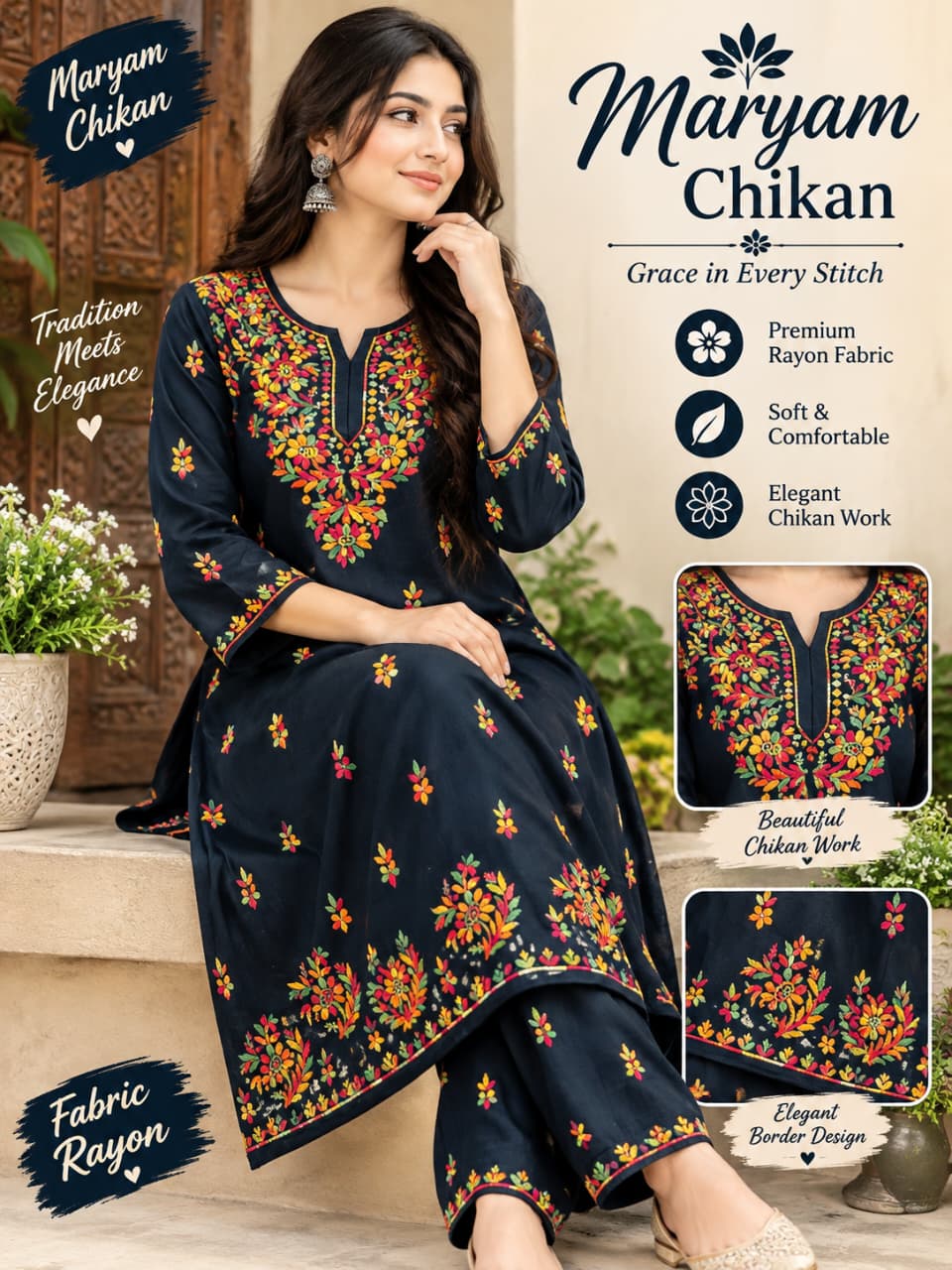
Our Signature Stitches
Every stitch has its own poetic name, technique, and generational heritage
Bakhiya (Shadow Work)
Embroidered on the wrong side with herringbone stitches so a subtle, ethereal tint emerges through translucent muslins and georgettes.
Phanda (Millet Seed Knot)
Raised circular knots resembling small millet grains, frequently clustered to build petals, floral pistils, and textural centerpieces.
Keel Kangan
A stitch resembling small fish-scales or nailheads, used to frame delicate vine stalks and graceful curving motifs.
Jaali (Latticework)
A celebrated technique where warp and weft threads are separated using a needle point without cutting the fabric to create delicate jaali grilles.
Mukaish (Badla Gold)
Pure metallic wire tucked into the weave and flattened with miniature cowrie shells to mimic glistening starlight.
Tepchi & Ghaspatti
Swift running stitches resembling grass blades used in breezy summer mulmul kurtis for minimalist, modern everyday elegance.
Preserving Living Heritage
Chikankari is more than fashion—it is a living cultural tapestry passed down from mothers to daughters in the historic mohallas of Lucknow. We ensure every artisan is honored and compensated fairly.
Chikankari Fabric Care Guide
Washing Protocol
Pure Mulmul Cotton garments may be hand-washed in cold water with mild detergent. For Georgette, Silk, and Mukaish pieces, dry cleaning is strongly recommended.
Drying & Storage
Never wring embroidered apparel. Dry flat in natural shade to preserve delicate pastel dyes. Store in breathable muslin cloth bags to allow the natural fibers to breathe.
Ironing Guide
Always iron on the reverse side using low to medium heat settings. Placing a soft cotton cloth between the iron and embroidery prevents stitch damage.